The Hidden Costs of Poor Network Infrastructure
Poor network infrastructure quietly drains money from small and medium-sized businesses through downtime, slow troubleshooting, and premature hardware failures. Here's how to spot the hidden costs before they impact your bottom line.
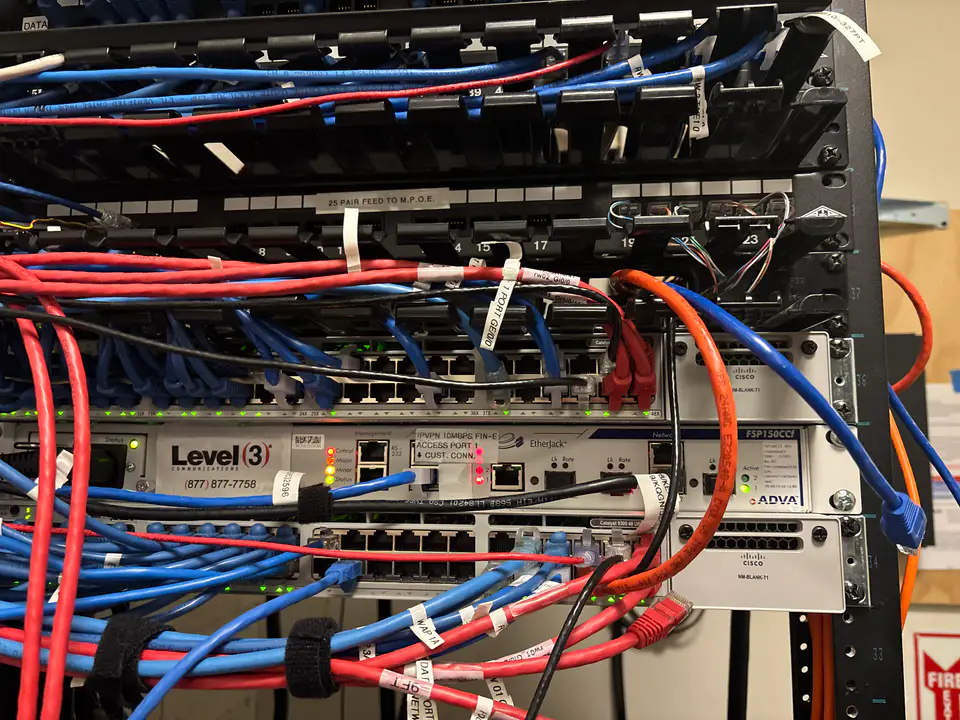
Poor network infrastructure doesn't announce itself. It hides behind slow Wi-Fi, random outages, overloaded switches, and messy cable rooms that still work. But for small and medium-sized businesses, these issues quietly drain money every single day through lost productivity, downtime, and emergency fixes that should never have been needed.
Why SMBs Feel the Pain First
Large enterprises can absorb inefficiencies. SMBs cannot. When a network goes down, even briefly, the impact is immediate: employees stop working, customers wait, and revenue stalls.
The Real Cost of Downtime
Downtime is not just an IT problem; it's a business problem. Even a small outage can trigger a chain reaction of idle labor, lost revenue, emergency IT costs, and reputation damage.
How Poor Infrastructure Creates Hidden Expenses
Most SMBs don't realize how much money they lose because the costs are spread out over time through slow troubleshooting, premature hardware failure, security gaps, and inconsistent performance.
What Good Infrastructure Actually Looks Like
Reliable networks are built with discipline: documented cable maps, proper cable support, mounted and ventilated equipment, compliance testing, and clean organized enclosures.
Why Fixing Infrastructure Saves Money
When SMBs invest in proper network infrastructure, they see faster support, higher uptime, better scalability, and lower lifetime costs.
Final Thoughts
Poor network infrastructure is not a technical inconvenience - it's a financial liability. A clean, documented, standards-driven network is one of the highest-ROI investments a growing business can make.