Cat6 and Ethernet Installation: What a Commercial Cabling Quote Should Include
Compare commercial Ethernet installation quotes by scope, pathways, components, testing, and documentation—not cable-drop price alone.
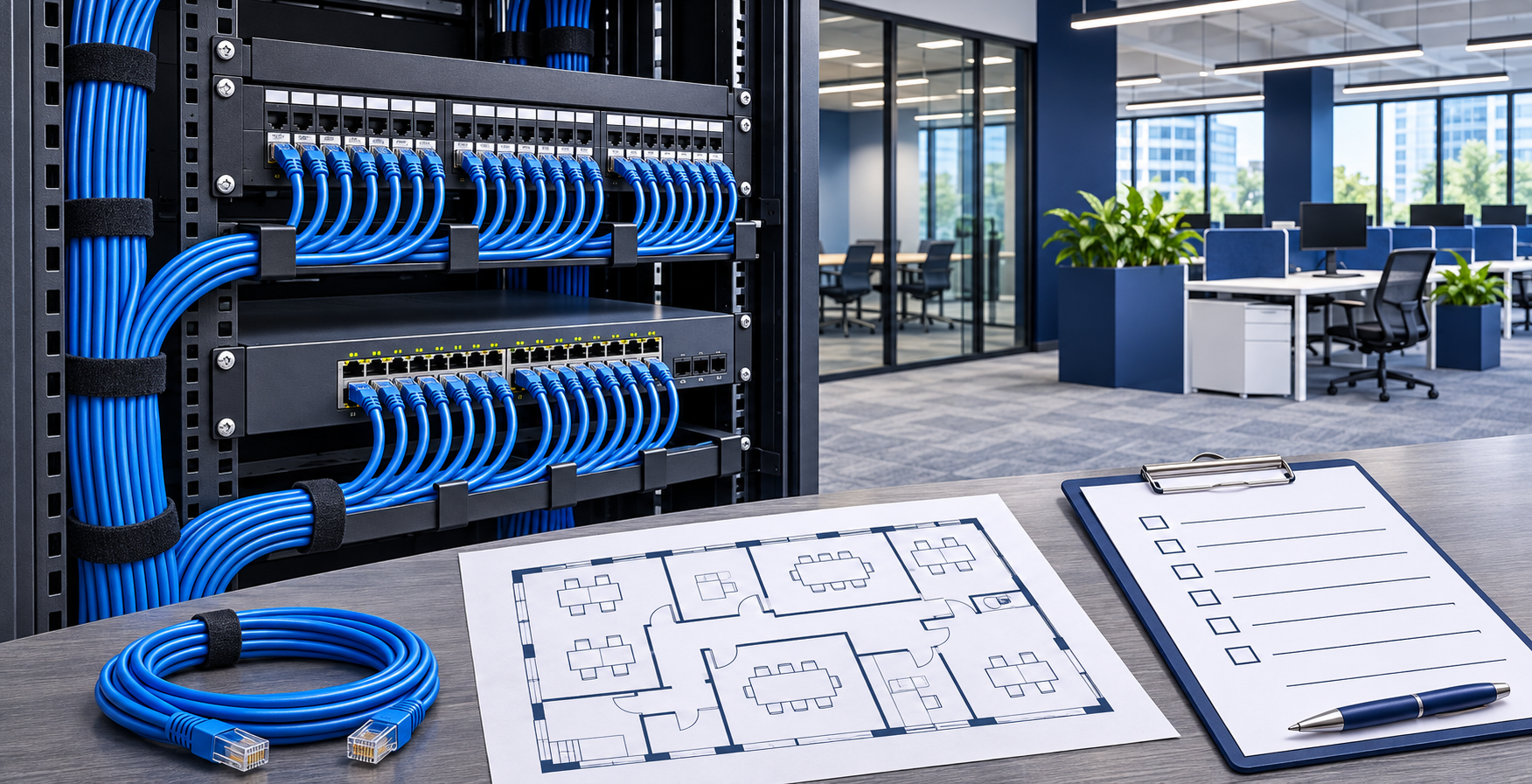
A low price per Ethernet drop can become an expensive installation when the quote leaves out access equipment, patch panels, testing, or the work needed to reach the rack. Before hiring a network cabling contractor, make sure every bidder is pricing the same finished result: a usable, traceable connection from the telecom room to the device.
Define the Devices Before Counting Cable Drops
Start with a marked floor plan. Identify workstations, printers, wireless access points, phones, cameras, and other connected equipment. Count the required connections at each location rather than assuming that one outlet serves every device nearby. Note expected moves and expansion separately so optional capacity can be priced clearly.
For Southern California offices, warehouses, and tenant improvements, the pathway can affect the installation as much as the endpoint count. Open ceilings, occupied suites, inaccessible walls, shared risers, and work above active operations create different labor and coordination requirements.
Ask for a Complete Scope
- Cable and connecting hardware: Specify the cable category, jacket rating appropriate to the space, outlets, jacks, patch panels, and patch cords included.
- Pathways and supports: Identify existing usable pathways, new supports, sleeves, and any conduit or trade coordination required.
- Rack work: Include termination, cable management, labeling, and the space needed for the new connections.
- Site conditions: State access hours, lift requirements, ceiling restrictions, protection of occupied areas, and cleanup expectations.
- Testing and closeout: Define the acceptance test, required reports, labeling scheme, and final port map.
Choose Cat6 or Cat6A Around the Application
Do not select a cable category from a speed claim alone. Review the required Ethernet application, installed length, pathway capacity, PoE requirements, environment, and future equipment plans. Cat6A may be appropriate where the design calls for higher-performance links, but larger cables and components also affect routing and rack space. Ask the contractor to explain the proposed system as a complete channel rather than selling cable in isolation.
Separate Connectivity From Acceptance
A laptop connecting successfully does not establish that a link meets the specified cabling performance. Agree on the test configuration and acceptance criteria before installation. Where certification is required, request reports tied to the cable IDs and the specified link limits. Clarify whether the project tests permanent links or complete channels and which components are included.
Avoid Ambiguous Change Orders
Ask how concealed conditions, blocked pathways, additional outlets, firestopping, and abandoned-cable removal will be handled. Confirm responsibilities for permits and landlord approvals where applicable. A useful quote identifies exclusions without leaving essential handoffs unassigned.
Compare the cost of a documented, accepted connection—not just the cost of pulling a cable.
Plan Your Cabling With SkaiCloud Network
SkaiCloud Network supports commercial structured cabling, rack build-outs, testing, and documentation across Southern California. Before requesting a quote, gather the floor plan, device locations, occupancy schedule, and existing rack photos. Request a cabling scope review to establish what the installation must deliver before comparing prices.
Featured image: AI-generated conceptual illustration; not a photograph of an actual client installation.